


When To Use Electroplated Tools
Sep 17, 2026
Leave a message
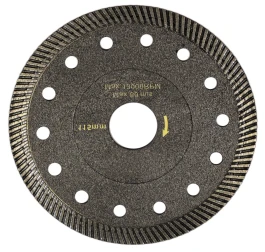
Electroplating Process – Thin Blades for Precision Work
While sintering and welding dominate diamond tool manufacturing, electroplating offers a different approach - one that's ideal for thin blades, small diameter tools, and applications where precision matters more than heavy material removal.
What Is Electroplating?
Electroplating is a process where diamond particles are attached to a steel core using an electro-deposited metal layer (typically nickel or a nickel alloy). The core is placed in an electrolytic bath, and an electric current causes metal ions to deposit onto the core surface, trapping diamond particles in the growing metal layer.
The result is a single layer of diamond particles firmly embedded in a metal coating - unlike sintered segments, which have diamond distributed throughout the entire thickness.
When to Use Electroplated Tools
| Application | Why Electroplating? |
|---|---|
| Thin cutting blades (<2mm) | Cannot accommodate thick sintered segments |
| Small diameter tools (<4") | Sintering becomes impractical at small sizes |
| Profile wheels and special shapes | Electroplating can coat complex geometries |
| Low-volume or custom tools | Lower tooling cost than sintering |
Important Note: Since 2012, China has been phasing out electroplated diamond tool production due to significant environmental concerns (heavy metal pollution). Many manufacturers have transitioned to vacuum brazing as a cleaner alternative.
Electroplating vs. Sintering
| Factor | Electroplating | Sintering |
|---|---|---|
| Diamond layers | Single layer | Multiple layers |
| Tool life | Shorter (single layer of diamonds) | Longer (diamonds throughout segment) |
| Cutting speed | Fast initially, slows as diamonds wear | Consistent throughout life |
| Cost | Lower for small runs | Higher tooling cost, lower per-unit |
| Best for | Thin blades, precision work | Heavy cutting, long life |
Design Considerations for Electroplated Tools
For effective electroplated tools, manufacturers focus on:
High-quality coarse diamond crystals - Larger particles provide better cutting action
Controlled embedment depth - Ensuring diamond exposure above the plating layer (typically >0.1mm)
Uniform particle distribution - Even spacing prevents uneven wear
One Final Reminder
Electroplated tools excel at precision but sacrifice longevity. If your application demands high-volume, heavy cutting, sintered or laser-welded tools are the better choice. If you need a thin, precise cut on a specialized job, electroplating may be the answer.
Not sure which manufacturing process fits your needs? Contact the Diaflex technical team for guidance.