

Do diamond hole saws produce a lot of dust?
Oct 15, 2025
Leave a message
When it comes to the question of whether diamond hole saws produce a lot of dust, it's a topic that concerns many professionals and DIY enthusiasts alike. As a supplier of diamond hole saws, I've had numerous discussions with customers about this very issue, and I'd like to share some in - depth insights.
First, let's understand what diamond hole saws are. Diamond hole saws are cutting tools designed to create holes in a variety of hard materials such as tiles, ceramics, glass, and even some types of stone. They are equipped with industrial - grade diamonds on the cutting edge, which gives them the ability to cut through these tough materials effectively. You can find a wide range of Diamond Hole Saws on our website, suitable for different applications and materials.
The amount of dust produced by diamond hole saws depends on several factors. One of the primary factors is the material being cut. For instance, when cutting through soft tiles, the dust generation is relatively less compared to cutting through dense and hard stones. Soft tiles have a more porous structure, and the cutting action of the diamond hole saw can break the material into larger fragments rather than fine dust. On the other hand, hard stones like granite or quartzite are much denser, and the cutting process can generate a significant amount of fine dust.
Another important factor is the cutting method. Dry cutting with diamond hole saws generally produces more dust than wet cutting. In dry cutting, there is no water to suppress the dust particles. As the diamond hole saw grinds through the material, the friction causes the material to break into tiny pieces, which then become airborne. This can lead to a dusty work environment, which is not only a nuisance but also a potential health hazard if inhaled over a long period.
In contrast, wet cutting involves using water to cool the diamond hole saw and the material being cut. The water acts as a lubricant and also helps to capture the dust particles. As the diamond hole saw cuts through the material, the water mixes with the dust, creating a slurry. This slurry can be easily collected and disposed of, significantly reducing the amount of airborne dust. For this reason, wet cutting is often recommended when using diamond hole saws, especially in indoor or confined spaces.
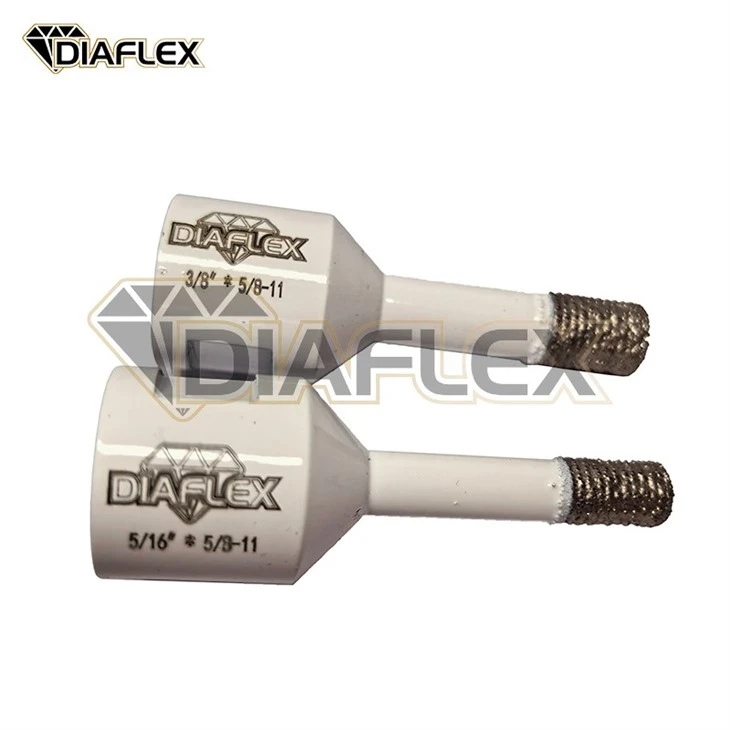

Let's also consider the design of the diamond hole saw itself. High - quality diamond hole saws are designed to cut more efficiently, which can also have an impact on dust production. A well - designed diamond hole saw will have the right diamond concentration and bond strength. If the diamond concentration is too low, the saw may struggle to cut through the material, causing more friction and potentially generating more dust. Conversely, if the bond strength is too weak, the diamonds may fall off prematurely, reducing the cutting efficiency and increasing dust production.
Our company offers Tile Core Drill Bit and Standard Diamond Core Drill Bit For Tiles, which are engineered with the latest technology to ensure optimal cutting performance and minimize dust generation. These products are made with high - quality diamonds and a carefully formulated bond, allowing for smooth and efficient cutting.
Now, let's talk about the implications of dust production. Excessive dust in the work environment can pose several problems. From a health perspective, inhaling fine dust particles can cause respiratory problems, including lung irritation, coughing, and in severe cases, more serious conditions such as silicosis. Silicosis is a lung disease caused by long - term exposure to crystalline silica dust, which is commonly found in materials like stone and some types of tiles.
In addition to health concerns, dust can also damage equipment. Fine dust particles can enter the moving parts of power tools, causing wear and tear and potentially reducing the lifespan of the equipment. It can also contaminate the work area, making it difficult to maintain a clean and safe workspace.
To mitigate the dust problem, there are several measures that can be taken. As mentioned earlier, wet cutting is an effective way to reduce dust. Additionally, using dust collection systems can help to capture the dust at the source. There are various types of dust collection systems available, from simple handheld vacuum attachments to more sophisticated industrial - grade systems.
When choosing a dust collection system, it's important to consider the size of the work area and the type of material being cut. For small - scale DIY projects, a handheld vacuum may be sufficient. However, for large - scale commercial projects, a more powerful industrial dust collection system may be required.
As a supplier of diamond hole saws, we understand the importance of providing our customers with products that not only perform well but also minimize the negative impacts associated with dust production. Our diamond hole saws are designed to be as efficient as possible, reducing the amount of dust generated during the cutting process. We also offer advice and support to our customers on the best cutting methods and dust control measures.
If you're in the market for high - quality diamond hole saws or have any questions about dust production and control, we'd love to hear from you. Whether you're a professional contractor or a DIY enthusiast, our team of experts can help you find the right products for your needs. Contact us to start a discussion about your requirements and explore how our diamond hole saws can enhance your cutting projects.
References
- "Cutting Tools and Their Applications" by Kalpakjian, S. and Schmid, S.R.
- "Industrial Diamond Technology" by Field, J.E.
- Various industry reports on power tool safety and dust control.